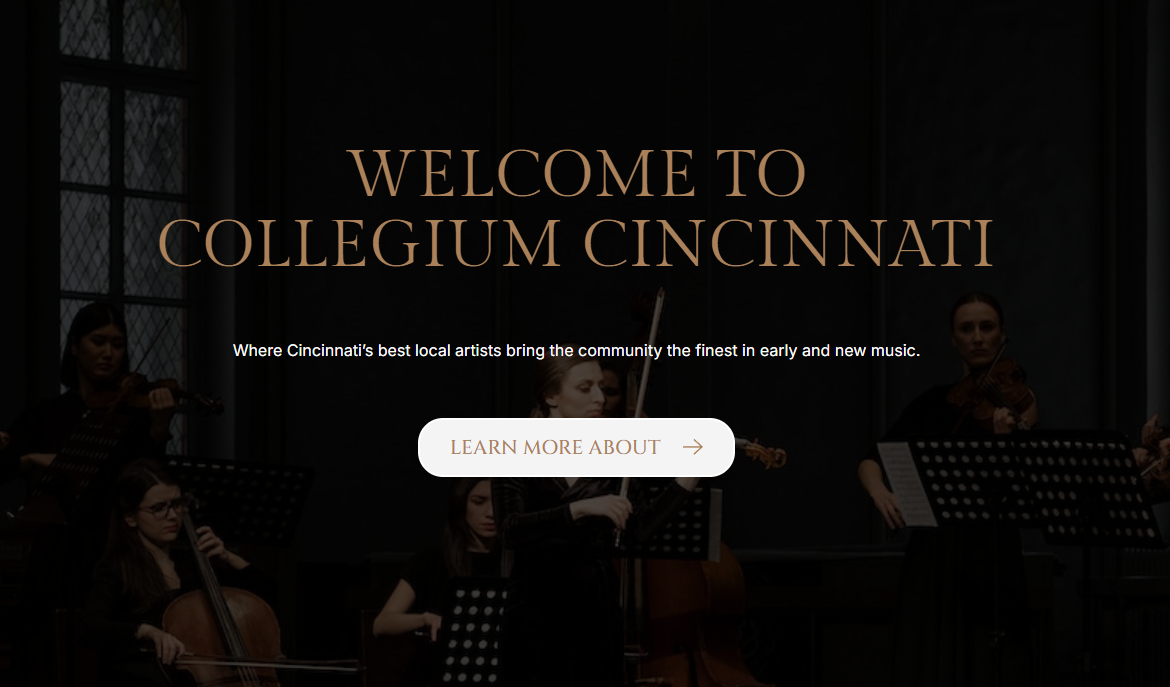
The website for Collegium Cincinnati welcomes visitors with a strong message: “Where Cincinnati’s best local artists bring the community the finest in early and new music.” On the homepage, high‑impact imagery of live performances immediately places the viewer into the ensemble’s world of choral‑instrumental excellence. Navigation is clear and segmented—Home, About, News, Events, Gallery, Staff, Donation, Contact—making it easy for patrons, musicians, and donors to find what they need.
In the ‘About’ section the site describes the group as dedicated to embracing both historic masters and contemporary works: “a musical journey that reveres great masters and we celebrate new works.”
The Events page lays out upcoming concerts in a clean list format, including dates, venues, ticket links, and easy calendar export options for mobile or desktop. News and Blog sections keep the community informed about season launches, special performances, and updates, thereby enhancing ongoing engagement and loyalty. A Donation page underscores the organization’s nonprofit status (501c3) and invites supporters to contribute with clarity about how funds are used.
The Gallery presents evocative concert photography and staff portraits which build both brand identity and emotional connection with the audience. Mobile responsiveness is evident—layouts scale well, menu toggles, and content remains readable on phones and tablets which is essential for on‑the‑go users. Calls to action such as “See All Events”, “Donate”, and “Subscribe to our newsletter” are placed thoughtfully without overwhelming the visitor.
The overall tone of the site balances musical artistry with community‑fare—conveying that this is not just performance, but part of the cultural fabric of Cincinnati. Design elements—such as generous white space, clean typography, and visually consistent icons—lend a professional yet approachable feel. Credibility is reinforced by listing venue details, ticket pricing, and contact information (e.g., “318 East 4th St, Cincinnati, OH 45202”).
In summary, the project offers a well‑structured and visually appealing digital platform for showcasing the ensemble’s mission, events, and community engagement all in one place. This website stands as a compelling example of how a performing arts organization can present itself online: accessible, authoritative and inviting.
The website for Collegium Cincinnati welcomes visitors with a strong message: “Where Cincinnati’s best local artists bring the community the finest in early and new music.” On the homepage, high‑impact imagery of live performances immediately places the viewer into the ensemble’s world of choral‑instrumental excellence. Navigation is clear and segmented—Home, About, News, Events, Gallery, Staff, Donation, Contact—making it easy for patrons, musicians, and donors to find what they need.
Design
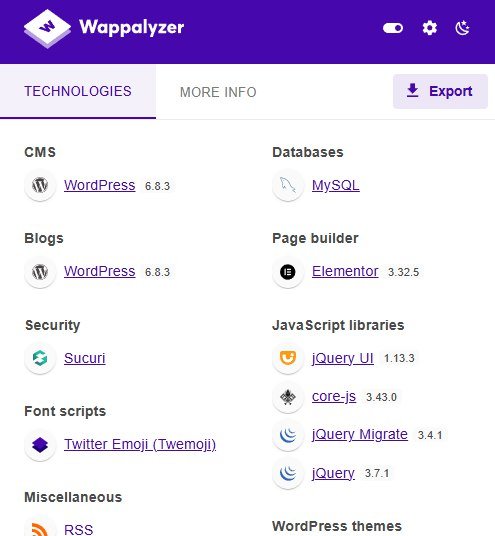
CMS : Wordpress
Page Builder : Elementor
Description
Technology Information
⚙️ Collegium Cincinnati – Technology Information
Platform: Built on WordPress CMS, enabling easy management of pages, events, news, and multimedia content.
Theme: Likely uses a premium or custom WordPress theme designed for performing arts or nonprofit organizations.
Page Builder: May use Elementor Pro or the Gutenberg block editor for flexible layouts and custom sections.
Frontend Technologies: Uses HTML5, CSS3, and JavaScript (ES6) for responsive layouts, smooth interactions, and gallery displays.
Responsive Framework: Built with Bootstrap or a theme-native responsive grid system for mobile-first design.
Design & UX: Focused on readability and accessibility with clear navigation, visually appealing imagery, and well-structured event listings.
Plugins Used:
The Events Calendar – to manage concert schedules and events
WPForms / Contact Form 7 – for newsletter subscriptions and contact forms
Yoast SEO / Rank Math – for search engine optimization
Smush / ShortPixel – for image compression
Jetpack – for security, backups, and performance monitoring
Security: SSL encryption (HTTPS) ensures safe browsing; may include Wordfence Security for firewall protection.
Hosting: Hosted on a WordPress-optimized hosting service such as SiteGround, Bluehost, or WP Engine for reliability and speed.
Performance Optimization: Uses lazy loading for images, minified CSS/JS, and possibly a CDN to improve global performance.
SEO Setup: Structured headings, metadata, and event schema to optimize visibility in search engines.
Typography & Icons: Integrates Google Fonts and Font Awesome for professional text styling and consistent icons.
Analytics: Likely connected to Google Analytics to track visitor engagement, page views, and newsletter subscriptions.
Backup & Maintenance: Automated backups and plugin updates possibly managed via UpdraftPlus or ManageWP.
Media Handling: Optimized galleries, high-quality concert images, and staff photos, ensuring visual impact without slowing page load.